
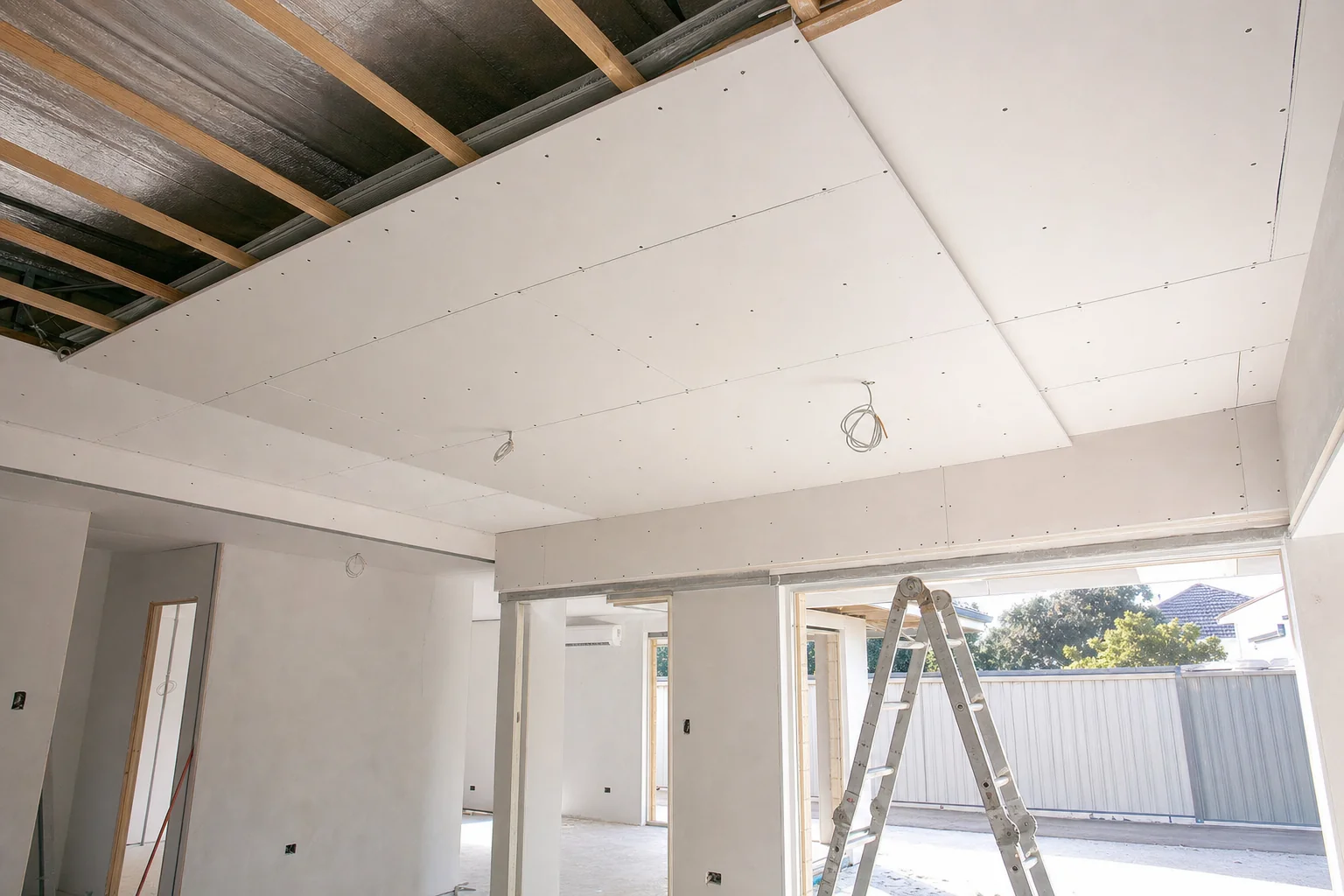
Suspended Ceilings in Perth
Licensed, insured, and quoted in writing within 48 hours. We tell you straight whether it can be saved.
Suspended ceilings, also called drop ceilings or false ceilings, are the system of choice for commercial fit-outs where access to services above the ceiling is needed, and for large-span residential areas where a plasterboard ceiling would require extensive primary framing.
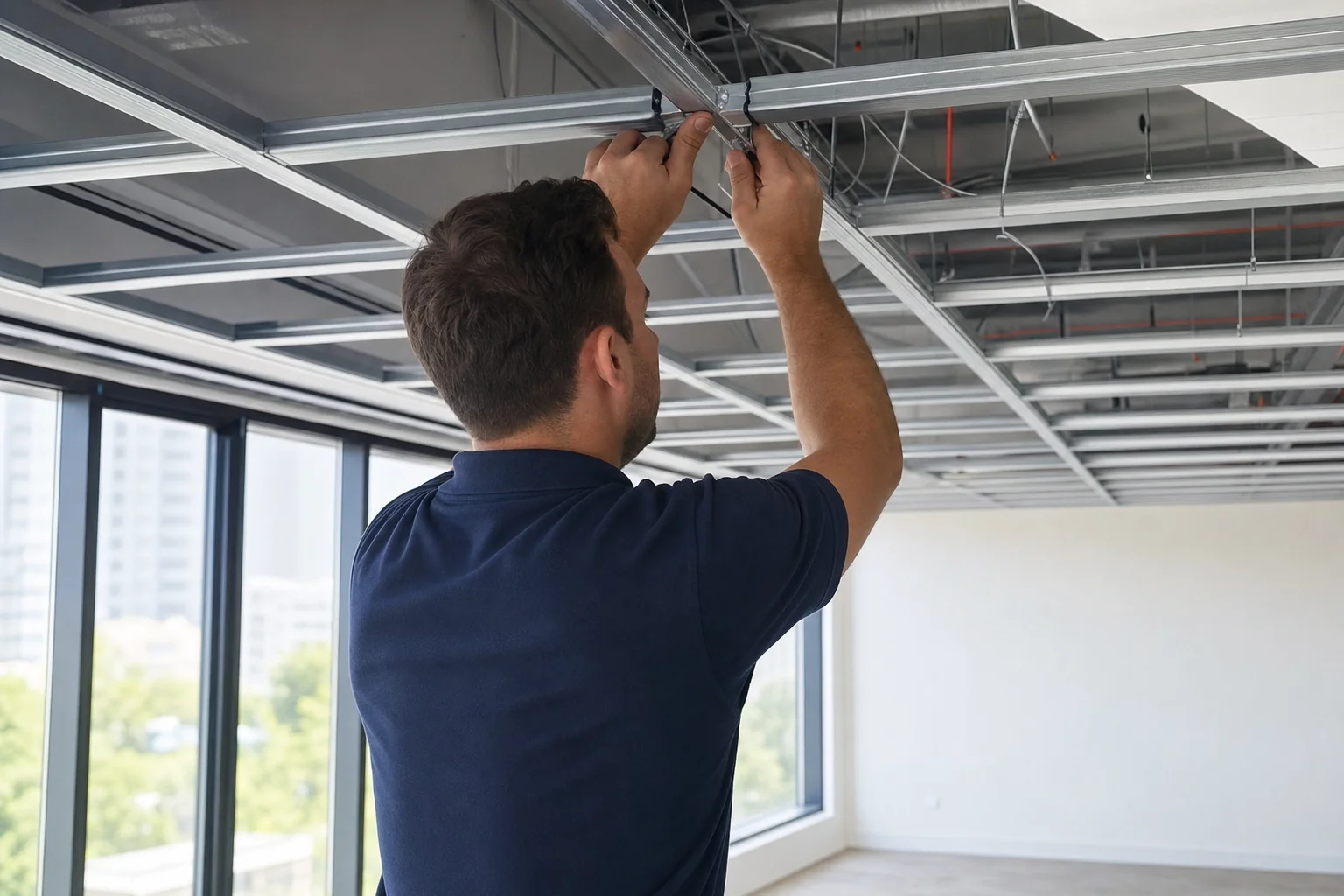
The grid is hung from the building structure using wire and hanger rods. Tiles, panels, or plasterboard sheets are dropped into the grid. The result is a ceiling that can be removed section by section for access and reinstalled cleanly.
We install and replace suspended ceiling systems across Perth, from commercial office fit-outs to large open-plan living areas and strata common areas.
The systems we install
Not all suspended ceilings are the same. The right system depends on the application.
| System | Typical use | Features |
|---|---|---|
| Standard acoustic tile grid (600×600) | Commercial offices, retail, schools | Removable tiles, conceals services, acoustic performance |
| Tegular edge tile grid | Offices, hospitality, commercial | Recessed tile edge for shadow-line aesthetic |
| Plasterboard grid | Large residential spans, commercial | Plasterboard in grid, fixed or hinged for access panels |
| Concealed grid (hidden) | Residential feature ceilings, apartments | Grid not visible, seamless panel-to-panel finish |
| Linear strip / blade | Commercial feature, hospitality | Open gaps between strips, visible services acceptable |
If there are services above the ceiling (HVAC ducts, electrical junction boxes, plumbing), we recommend incorporating hinged access panels into the grid design rather than plasterboard lid, even if the rest of the ceiling is standard plasterboard. It's cheap to do at installation time and expensive to cut in after.
How installation works

Survey and set-out
Ceiling height is confirmed, services above are mapped, and the grid layout is set out from the survey, accounting for light fittings, vents, sprinklers, and access requirements.

Perimeter angle installed
Wall angle (L-angle) is fixed around the room perimeter at the finished ceiling height, the starting reference for the grid.

Main tees suspended
Main runner tees are hung from the building structure using wire and hanger rods. Levelled to a laser reference before cross-tees are added.

Cross-tees complete the grid
Cross-tees are clipped into the mains, completing the grid at 600mm or 1200mm bays depending on tile size.

Tiles and infill panels dropped
Tiles, plasterboard panels, or specialist products dropped into the grid. Cut-outs made for lights, vents, and sprinkler heads.
Pricing for commercial and residential
For commercial spaces with services above the ceiling, suspended grid is almost always right, the access alone justifies it. For residential open-plan areas without services to access, standard plasterboard on metal furring is typically cheaper and produces a cleaner domestic finish.
- Commercial fit-out with services above (HVAC, electrical, data)
- Large residential span requiring acoustic improvement
- Access to above-ceiling services is ongoing need
- Strata common area, future maintenance access required
- Tenant fit-out, needs to be undone at lease end
- Standard residential room with no services above
- Lower ceiling height, suspended grid takes 100–150mm of headroom
- Clean domestic finish is the priority
- Access to ceiling cavity not required
- Budget is the deciding factor on a like-for-like replacement
Get a fixed-price quote for Suspended
We come out, look at the ceiling properly, and put the price in writing. No blow-outs on the day, no surprises after.
Questions homeowners ask us
Suspended ceiling installation in Perth runs $55–$90 per sqm for standard commercial acoustic tile grid, and $65–$100 per sqm for plasterboard-in-grid systems. Prices vary with ceiling height, access difficulty, and tile specification.
Related services
Plasterboard Ceiling Replacement Perth
Plasterboard and Gyprock ceiling replacement in Perth. 10mm CD standard, set to levels 3–5, paint-ready handover. Screwed installation, strapping inspection included.
Read more ServiceCeiling Restrapping Perth
Ceiling restrapping service in Perth, replace failed metal furring channel without full ceiling replacement. Licensed inspection, galvanised furring, joint touch-up included.
Read moreTell us what's going on with your ceiling.
We'll come out, take a proper look, and quote you in writing within 48 hours. If repair is the right call, we'll tell you. If it's beyond it, we'll replace it properly.