
Job File
- Suburb
- Ellenbrook, Perth
- Property
- Tenanted home, managed through a property manager
- Problem
- Ceiling collapse across the lounge and kitchen
- Root cause
- Adhesive failure between the plasterboard and the joists
- Contributing
- Waterlogged blown-in insulation, leaking roof tiles
- Area down
- 50 to 60 square metres
- Response
- Called Sunday, on site Monday
- Time on site
- Four days, start to finish
- Completed
- July 2026
AI Overview
Between 50 and 60 square metres of ceiling came down across the lounge and kitchen of a tenanted home in Ellenbrook. The property manager called on a Sunday and the crew was on site the next morning to clear the debris, quote the work and start the replacement. The cause was adhesive failure. The glue daubs holding the plasterboard to the joists had let go, which left the screws carrying an entire ceiling on their own, and waterlogged blown-in insulation plus a few leaking roof tiles had been adding weight those screws were never sized for. After re-sheeting the collapsed area, the crew checked the rest of the Ellenbrook house, found the same failure beginning in other rooms, and re-screwed every remaining ceiling in the property. Replacement, re-screw, flush and paint took four days.
Key highlights
- ›50 to 60 square metres of ceiling down across an open-plan lounge and kitchen
- ›Called on a Sunday, crew on site the following morning
- ›Root cause was adhesive failure, with wet insulation and roof leaks adding load
- ›The rest of the house was already failing, visible as pinhole marks in the board
- ›A re-screw runs at roughly a fifth of the cost of replacing a ceiling outright
- ›Replacement, re-screw, flush and paint completed in four days
 Diagram
What Was Wrong
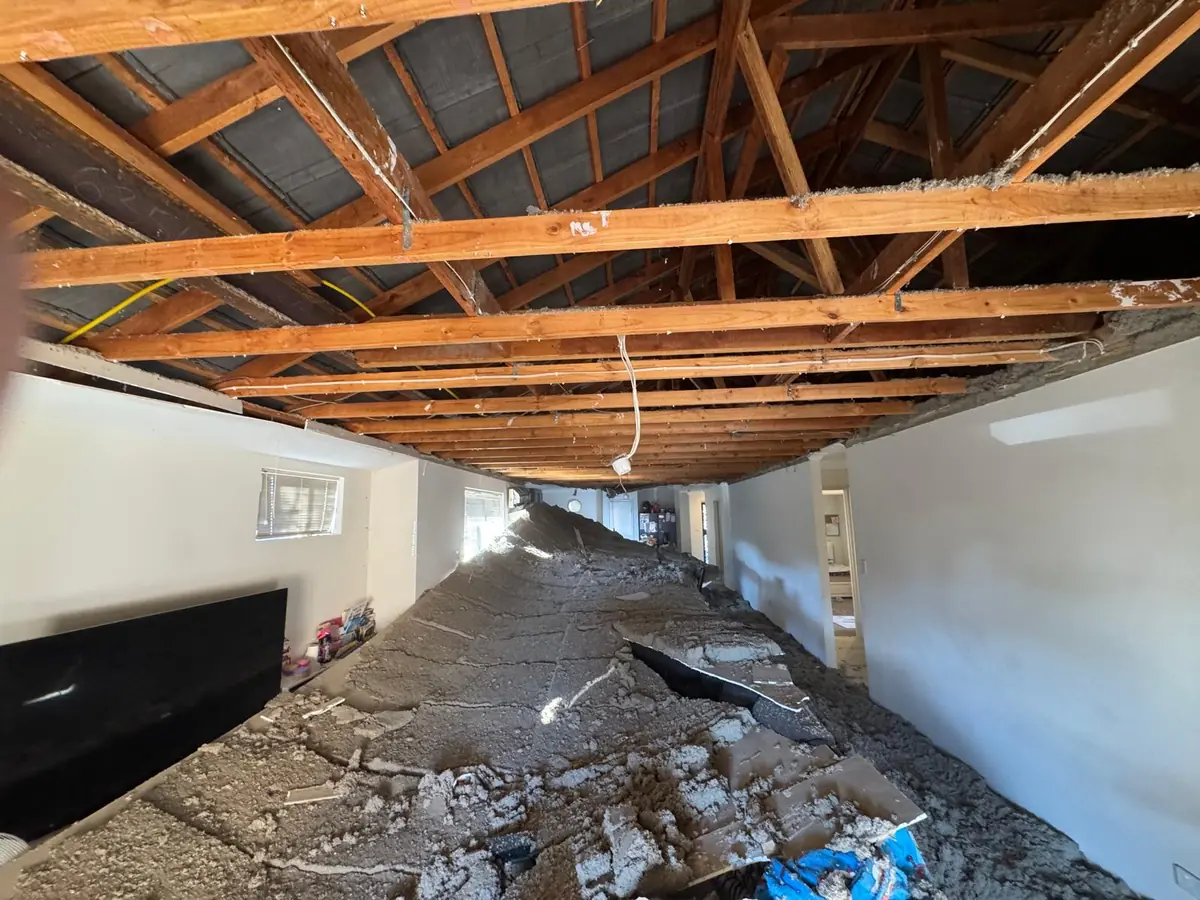
The call came in on a Sunday from the property manager looking after the house. A ceiling had come down across the open-plan lounge and kitchen and the room was not usable. Between 50 and 60 square metres of plasterboard was on the floor, along with the blown-in insulation that had been sitting on top of it.
A collapse that size is not a patch job. Everything that came down has to be cleared before anyone can see what is left, and the debris from a blown-insulation ceiling is heavier and dirtier than most people expect. The crew was on site on the Monday, cleared the room, and quoted the replacement from what they could then see.
Most ceilings give warning, and it is a sound rather than a sight. Creaking and popping is the fixings letting go one at a time, and each one that fails puts its load onto the next, so it compounds. From the first noise you usually have somewhere between half an hour and an hour.
What Caused It
The ceiling failed because the glue let go.
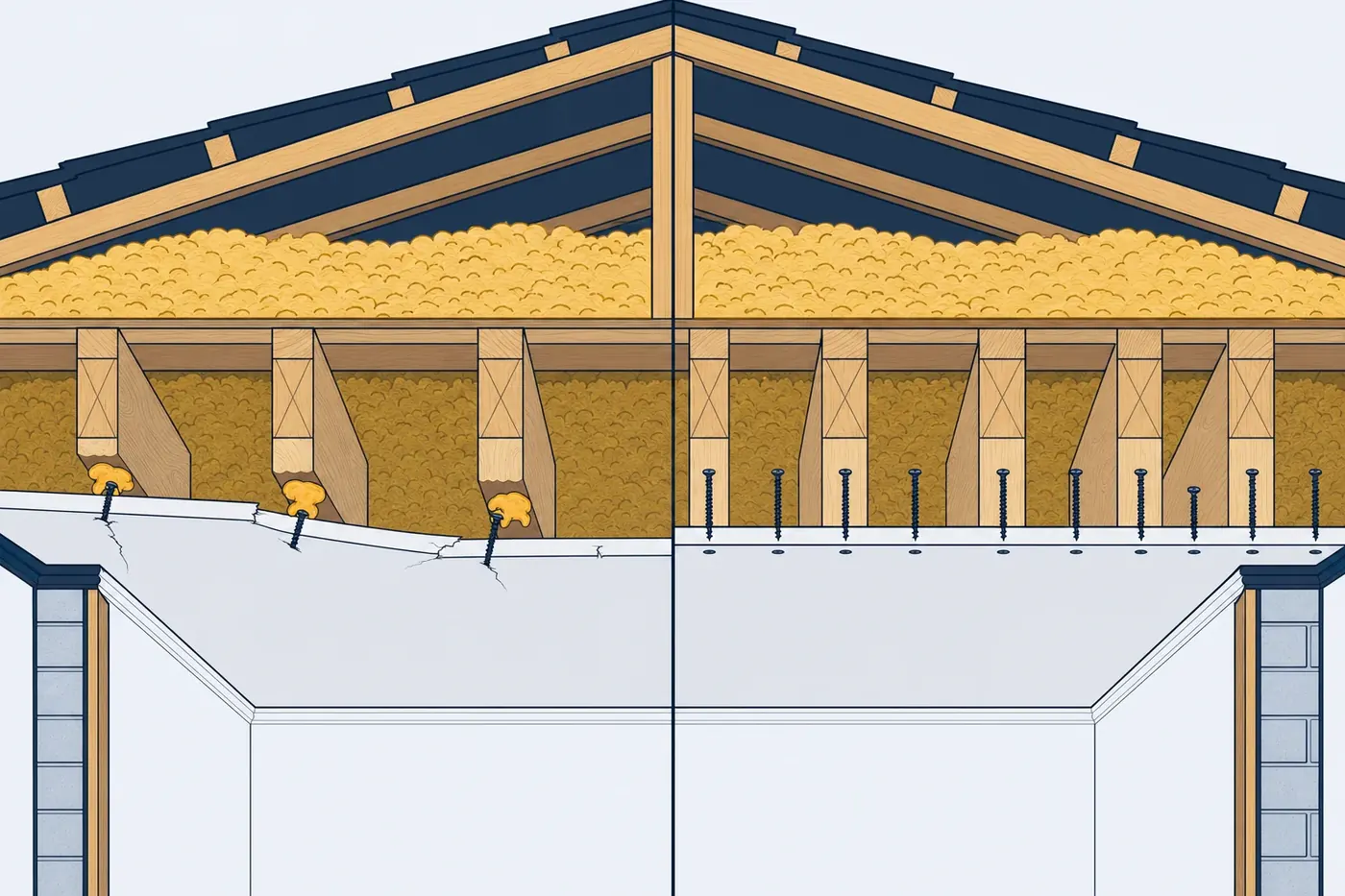
Plasterboard ceilings in Perth are fixed with a combination of adhesive daubs and screws. The adhesive carries most of the load. The screws hold the sheet while the glue cures and then act as a backup. Some batches of adhesive used in Perth homes have not held, and once the adhesive has failed the screws are carrying a whole ceiling on their own. They were never sized for that.
Two things made it worse in this house. The blown-in insulation had got wet, and wet insulation is heavy. It sits directly on the back of the plasterboard, so every extra kilogram goes straight onto fixings that are already struggling. And there were leaking roof tiles above, which is where the water was coming from.
The crew photographed the roof space once the ceiling was down and passed the images to the property manager so the tiles could be repaired as well. Putting a new ceiling under an active leak only buys you a few years.
| What was found | Why it mattered |
|---|---|
| Adhesive daubs no longer bonded to the joists | The screws were carrying the full weight of the sheet on their own |
| Blown-in insulation saturated | Wet insulation sits on the back of the board and adds load the fixings cannot take |
| Leaking roof tiles above the affected rooms | The source of the water, and still live until the tiles were repaired |
| Pinhole marks in the ceiling board elsewhere in the house | Screw heads pulling through as those sheets began to drop away too |
How We Fixed It
The collapsed section was cleared, re-sheeted and set. That was the job as quoted.
What was not in the quote was what the crew found when they looked at the rest of the house. The same failure had already started in other rooms. It shows up as small pinhole marks in the ceiling board, where the screw heads are being pulled through as the sheet drops away from the joist. Those ceilings had not come down, but they were on their way.
Rather than leave them, the crew re-screwed the whole property. A re-screw means running a second, denser pattern of fixings through the existing board into the joists, so the ceiling is held mechanically instead of relying on adhesive that has already been shown to fail. It is not cosmetic and it is not a patch. It is the difference between one room coming down and the next room coming down a year later.
Re-screwing and repainting a sound ceiling runs at roughly a fifth of what it costs to replace one outright. The catch is that it only works while the board is still up and still dry. Once a ceiling has come down, or once it has been soaked, re-screwing is off the table and you are replacing it.

Clear and assess
Everything that came down was removed, floors protected, and the exposed roof space photographed before anything went back up.

Re-sheet the collapsed area
New plasterboard through the lounge and kitchen, fixed properly to the joists rather than relying on adhesive.

Re-screw the rest of the house
A second pattern of fixings through every remaining ceiling, catching the rooms that had started to fail before they came down.

Flush, paint, refit
Joints set and sanded, painters through, electricians back to refit. Own trades, so nothing waited on a subcontractor's diary.
Because the electricians and painters are our own rather than subcontracted, the whole sequence ran without waiting on anyone else. Clear out, re-sheet, re-screw, flush, paint, refit. Four days from the first morning to the last.
The Result
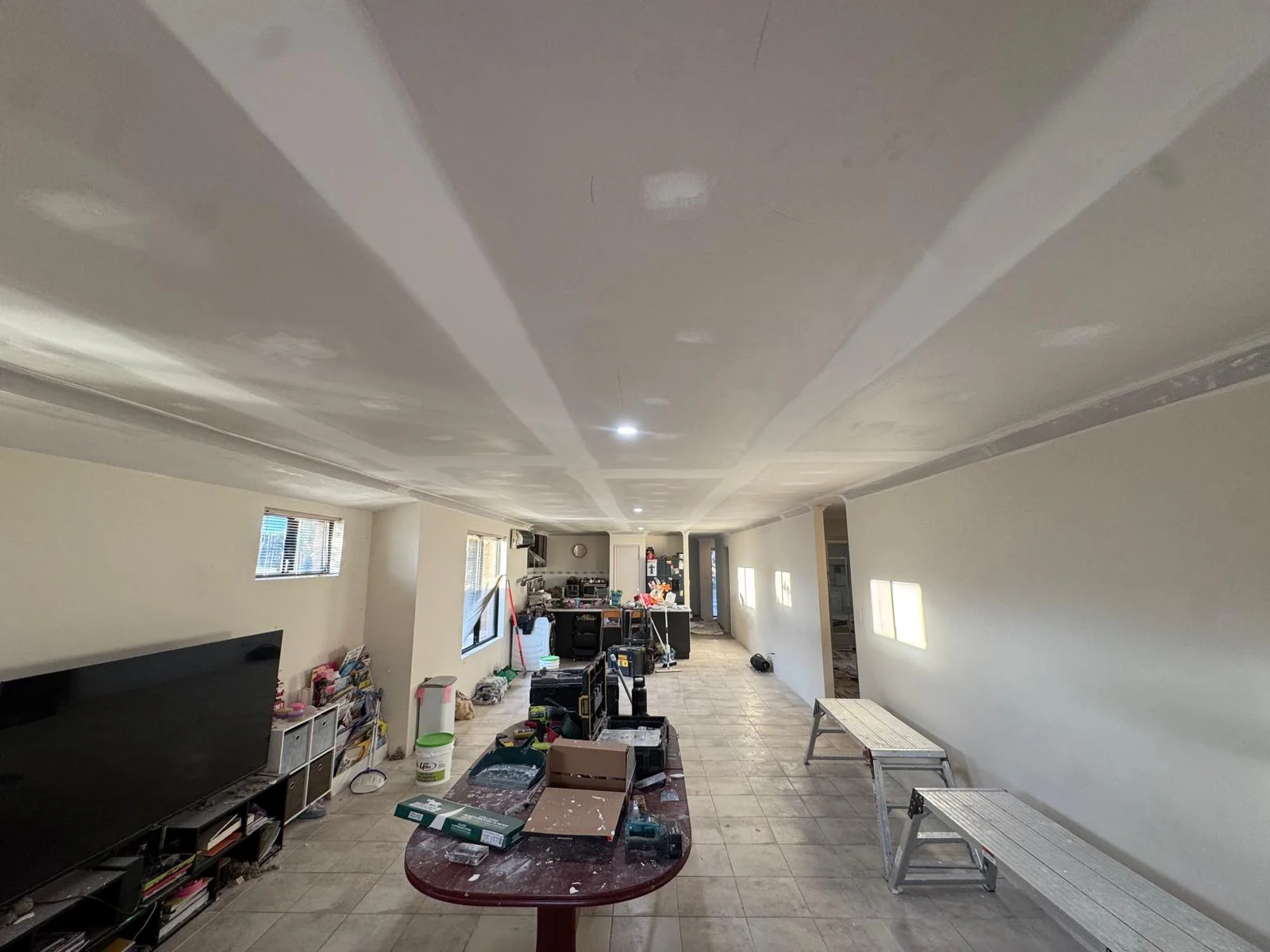
Four days after the crew arrived, the lounge and kitchen ceiling was back up, flushed and painted, and every other ceiling in the Ellenbrook house had been re-screwed. The rooms that had started to fail were caught before they came down, at a fraction of what it would have cost to replace them after the fact.
Photos From The Job
The lounge on the Monday morning. The ceiling is on the floor and the blown-in insulation has come down with it. The same room, same angle, re-sheeted and flushed. The painters followed the next day. From the kitchen end. Blown-in insulation went everywhere, which is most of the clean-up on a job like this. Clearing out before anything could be assessed. Twenty-odd years of dust comes down with the sheet.
Seeing pinhole marks, sagging or a stain on your own ceiling?
Send us a photo and we will tell you what is causing it, and whether it needs replacing or just re-strapping.
Send a photo of your ceiling