
Job File
- Address
- 2/21 Shackleton Road, Bassendean WA 6054
- Property
- Tenanted home, managed through a property manager
- Problem
- Ceiling at imminent risk of collapse
- Root cause
- Burst pipe in the ceiling space
- Contributing
- Blown-in insulation saturated and holding water
- First action
- Emergency make-safe, timber props
- Then
- Kitchen ceiling removed, remaining ceilings re-screwed
- Occupied
- Yes, tenants in place throughout
AI Overview
A burst pipe in the ceiling space of a tenanted home in Bassendean, in Perth's north-east, soaked the blown-in insulation above the ceiling, and saturated insulation gets heavy enough to bring a ceiling down. The property manager called it in and the crew went out to make it safe, propping the ceiling with timber supports so it could not fall while the plumbing was sorted. Once the plumber had stopped the water, the crew reassessed. The kitchen ceiling had to come out entirely rather than be dried and patched, because water had been sitting on top of it and a flat ceiling that has held standing water grows mould whether or not the surface looks clean. The remaining ceilings in the Bassendean house were re-screwed, the removed sections were replaced, and the painters and electricians followed to refit.
Key highlights
- ›Timber props went in first, before anything else was decided
- ›The burst pipe soaked blown-in insulation, which is what made the ceiling dangerous
- ›Water sitting on a flat ceiling for more than a day means mould, guaranteed
- ›Bleach does not solve it. The affected ceiling had to be removed
- ›Remaining ceilings re-screwed rather than left to fail later
- ›Tenants in place throughout, so the sequence was scheduled around them
 Diagram
What Was Wrong
The property manager looking after a tenanted house in Bassendean had spotted that a ceiling was on its way in and called it through. This is the call where the answer is not a quote, it is a crew, because a ceiling at that point is a matter of hours rather than days.
The crew went out and made it safe first. Timber supports went in under the ceiling to hold it up so that nothing could fall on anyone while the cause was still being traced. Only once the ceiling was physically propped did anyone start working out what had happened and what it was going to take.
Propping a ceiling stops it falling. It does not fix anything, and it does not mean the room is back in use. It buys the time to find the cause, get the right trades in the right order, and make a decision about the ceiling that is not being made under pressure.
What Caused It
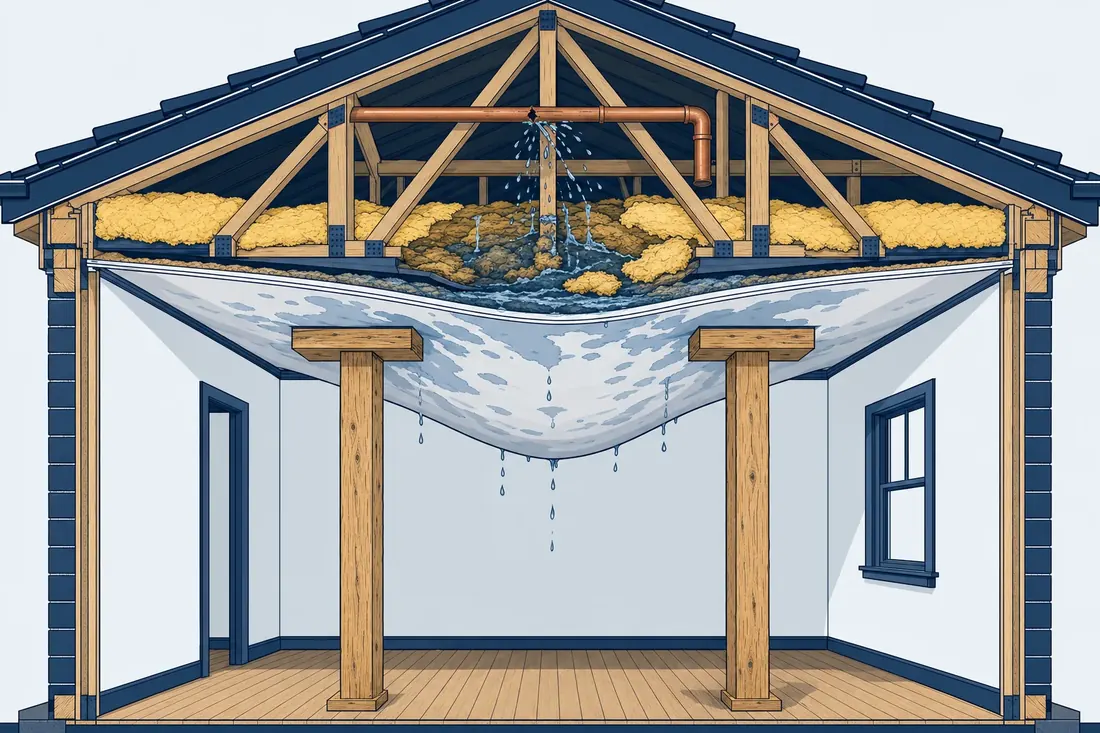
A pipe had burst in the ceiling space and had been spraying water into the blown-in insulation sitting on top of the plasterboard.
Blown-in insulation is light and harmless when it is dry. Wet, it behaves like a sponge with nowhere to drain, and all of that weight is carried by the ceiling fixings underneath it. That is the mechanism. The pipe did not damage the ceiling directly. It loaded it until the fixings could not hold.
Identifying that mattered for a practical reason. Once the crew could say it was a burst pipe rather than a roof leak, the property manager could get a plumber out to the right problem instead of a roofer to the wrong one.
How We Fixed It
With the water stopped, the ceiling was reassessed. The kitchen section came out rather than being dried and patched, and that decision was about mould rather than about the plasterboard.
A ceiling is a flat surface. When water gets above it, the water pools and sits there rather than running off. Anywhere standing water has been on a ceiling for more than about a day, mould follows, and it is growing on the side of the board nobody can see. Wiping bleach on the surface treats the part you can reach and leaves the part you cannot. The only honest answer on a ceiling that has held water is to take the affected sections out.
Beyond the kitchen, the rest of the ceilings in the Bassendean house were showing the same early signs of failure the crew sees constantly in Perth homes, so they were re-screwed rather than left. Then the sequence ran: demolition and re-screw, flush and set the following day, painters and electricians in behind to refit.

Make safe
Timber props under the ceiling the same visit, so nothing could come down while the cause was traced.

Identify and hand over
Burst pipe confirmed and reported, so the property manager could put a plumber on the actual problem.

Remove what had held water
The kitchen ceiling came out. Board that has had standing water above it is a mould problem, not a drying problem.

Re-screw, replace, refit
Remaining ceilings re-screwed, removed sections replaced, then flush, paint and electrical refit.
Working Around Tenants
The owner was not living there. Tenants were, which changes how the job runs more than any part of the ceiling work does.
Pulling a ceiling down is a messy, intrusive process. Twenty years of dust and insulation comes down with the sheet, several trades move through the house in sequence, and the room is unusable while it happens. Floors get plastic-covered, and the place gets a proper clean at the end, but there is no version of this that is invisible.
What actually keeps everyone calm is telling them what is happening before it happens. Who is coming, on which day, and what the house will look like when they get home. Almost every complaint in this trade traces back to somebody walking into a mess nobody warned them about.
Anything you do not want damaged needs to be out of the affected rooms before the crew arrives. We will move it for you and it will be charged fairly, but looking after someone's personal belongings is not something we can take responsibility for while we are pulling a ceiling down over the top of them.
Photos From The Job
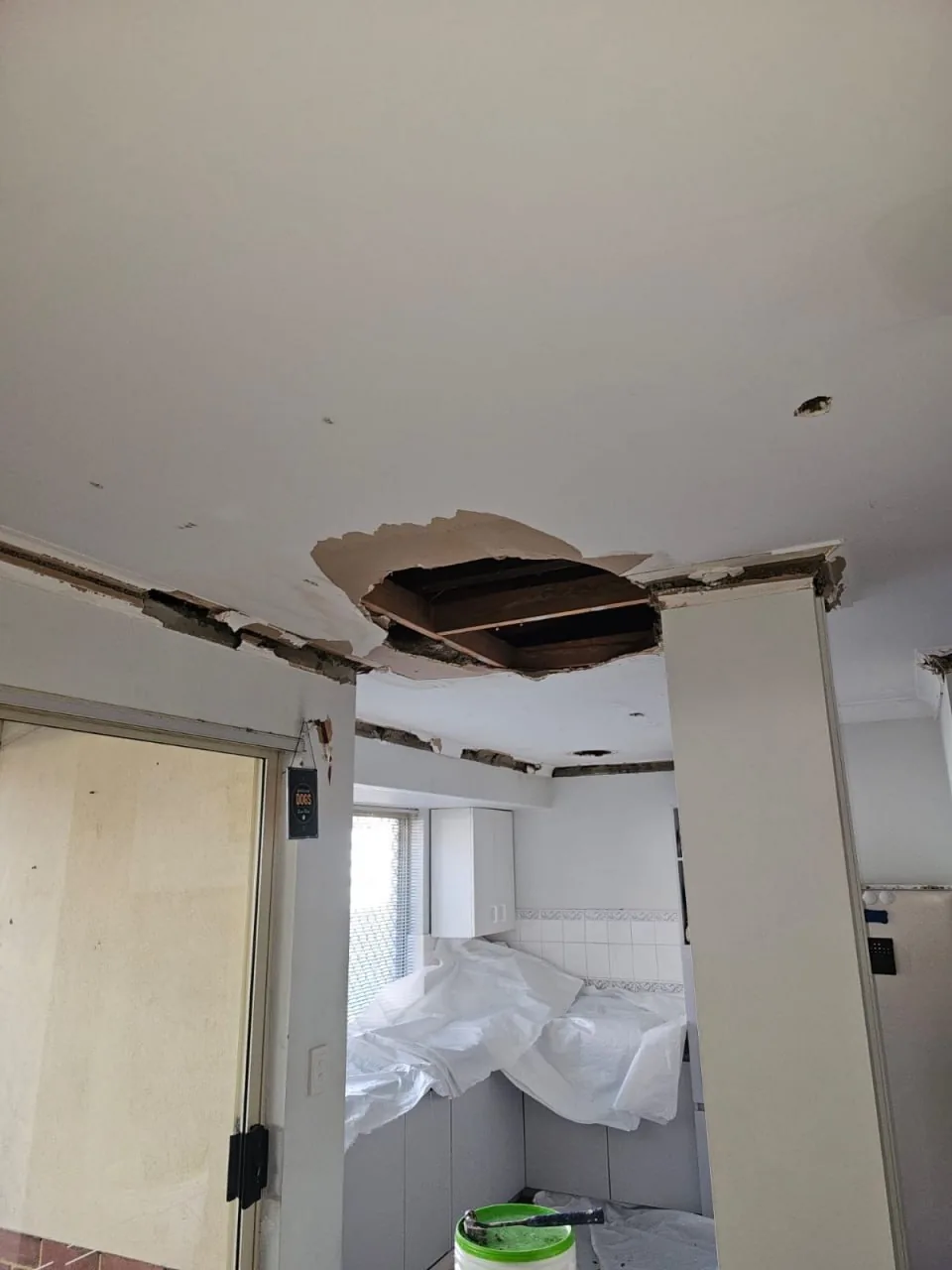
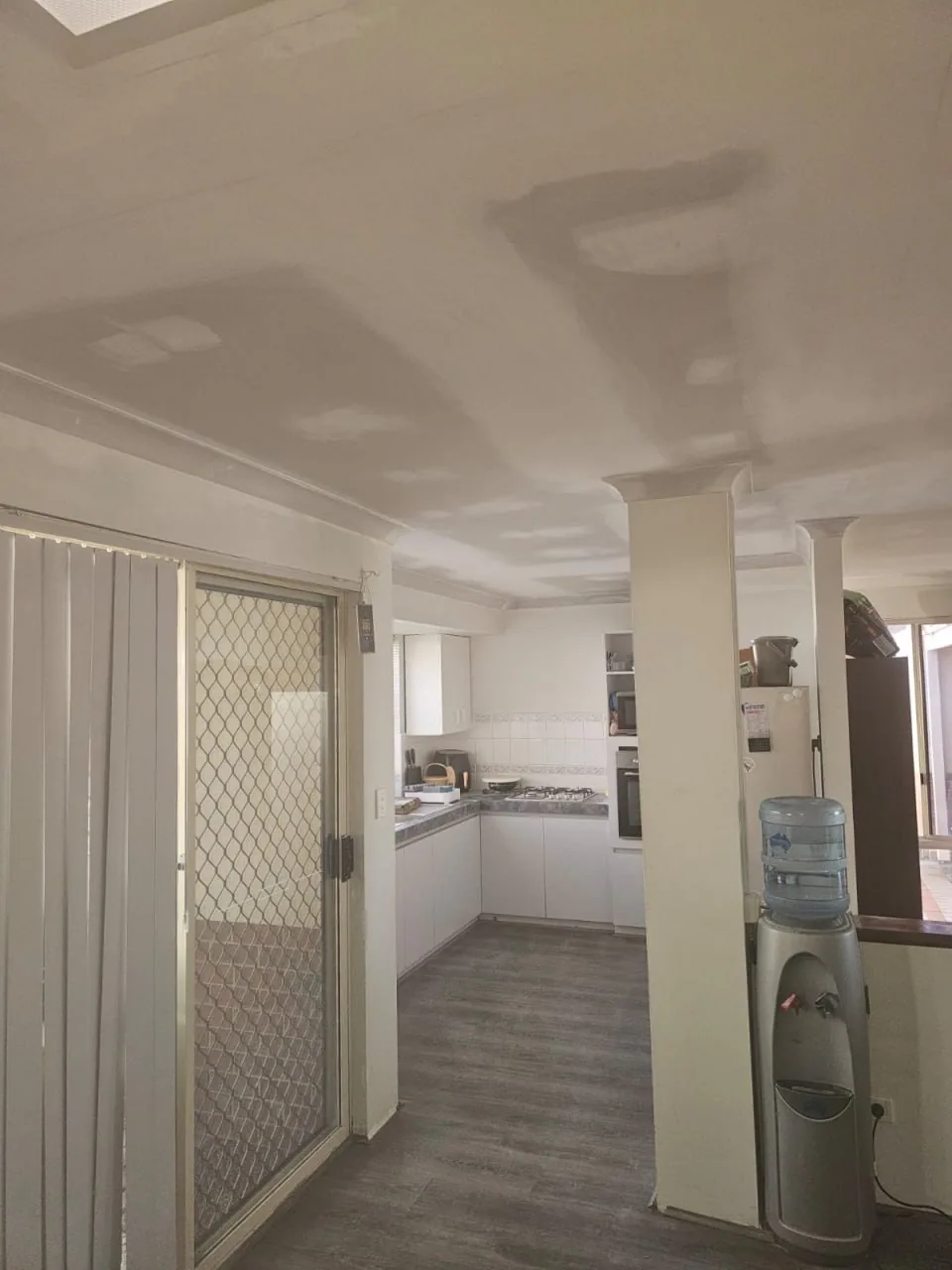
The kitchen doorway with the ceiling opened up, following how far the water had travelled. The same doorway and the same column, set flat with the cornice back on. The kitchen ceiling out, back to bare joists. What was sitting on top of the plasterboard. Wet insulation, and plenty of it. Water staining in a bedroom, well away from the kitchen. A join that has opened along its whole length. Water tracks to the cornice, and shows up there first. A chalk line finds the joist, then the screws go in along it. Screw heads patched over, ready to sand. A patched screw line across a dining area. Sanding the patches flat before any paint goes near it. New sheets up in the kitchen, joins not yet flushed. Flushed and set. The grey is compound, not the finish. A lounge ceiling patched and sanded flat. Cornice back to a clean line.
Seeing pinhole marks, sagging or a stain on your own ceiling?
Send us a photo and we will tell you what is causing it, and whether it needs replacing or just re-strapping.
Send a photo of your ceiling